Learning through soup
A Winter Evening of Homeschooling in the Kitchen
As the weather turns colder and winter colds begin making their way through our home, we decided there was nothing better for dinner than a warm, hearty vegetable soup. What began as a simple meal preparation quickly became an engaging homeschool lesson filled with meaningful learning opportunities.
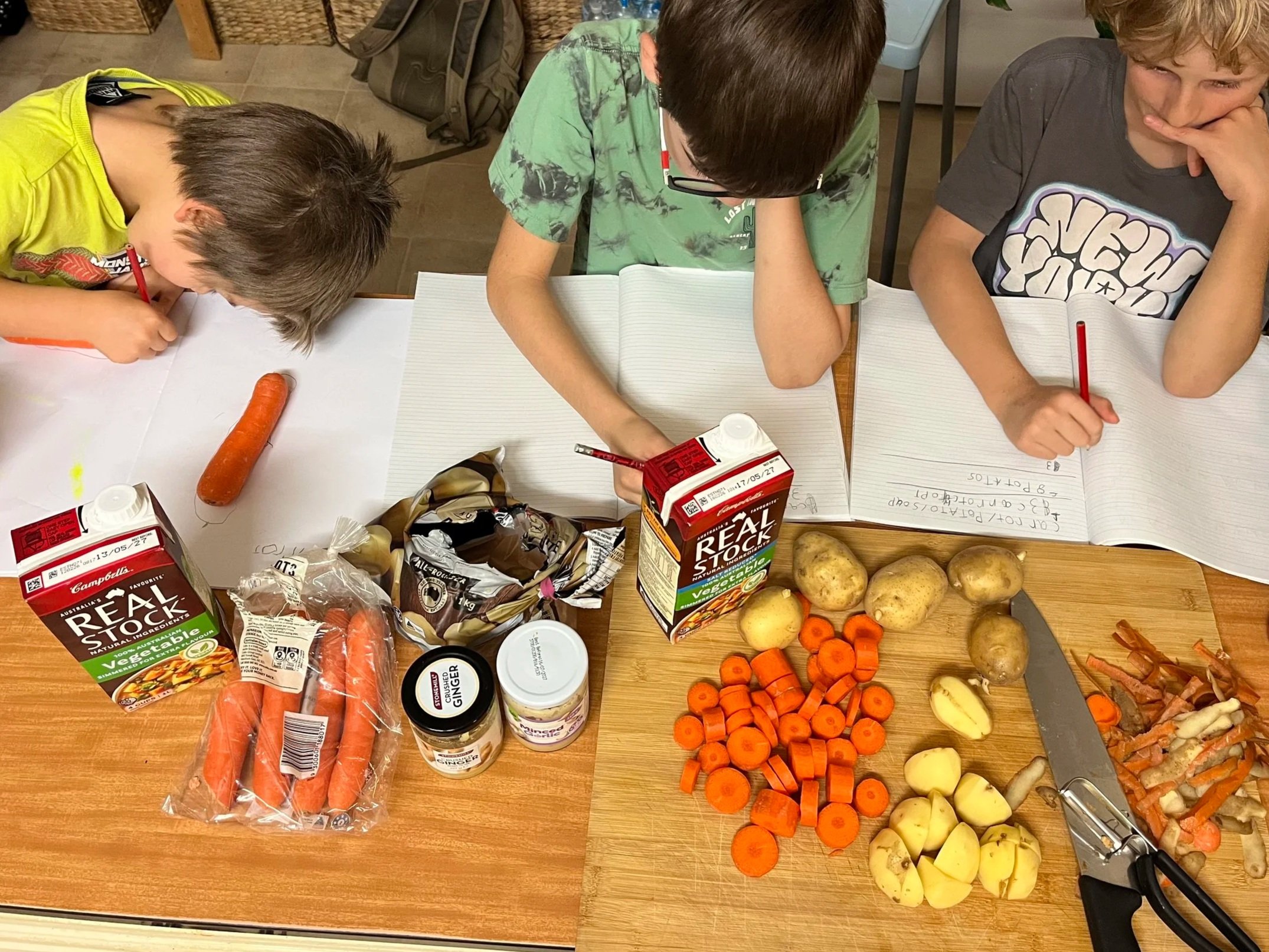
The boys joined Dad in the kitchen to help prepare the soup from start to finish. Before they even began chopping vegetables, they listened carefully as the recipe was read aloud. Together, they discussed the ingredients needed and the purpose each one served in the recipe.
They the boys recorded the ingredients in their notebooks, practising their writing skills while creating their own copy of the recipe. As they worked through each step, they noted the quantities required, discussed measurement units, and observed how ingredients changed throughout the cooking process.
Learning Across the Curriculum
Real-world experiences often provide some of the richest educational opportunities. What seems like a simple task of cooking soup for dinner (well I say simple but that always depends on what kind of soup you are making right?) But, this cooking task links to many different learning areas within the Australian Curriculum. Take a look:
English
Cooking provides authentic reasons to read, listen, write, and communicate. The boys listened to instructions, read ingredient names, discussed the recipe together, and recorded notes in their books. They practised spelling unfamiliar words and learned how procedural texts are structured.
Mathematics
The kitchen is full of mathematical thinking. We measured ingredients, counted quantities, compared amounts, estimated cooking times, and discussed fractions and volume. Learning mathematics through real-life situations helps children understand why these concepts are important and how they are used every day.
Science
Cooking is essentially a science experiment. The boys observed how vegetables softened when heated, how flavours combined, and how ingredients changed from their original form into a finished meal. They were able to make predictions and observe physical changes occurring throughout the cooking process.
Health and Physical Education
Preparing nutritious meals helps children develop an understanding of healthy eating habits and the role different foods play in supporting our bodies, especially when we’re feeling under the weather. As we discussed the ingredients in our soup, we talked about vitamins, vegetables, hydration, and how nourishing foods help our bodies recover and stay healthy.
Personal and Life Skills
Perhaps one of the most valuable lessons was learning practical life skills. Following a recipe, preparing ingredients safely, working cooperatively, cleaning up afterwards, and contributing to family meals all help build confidence and independence. These are skills that will serve them throughout their lives.
The Value of Everyday Learning
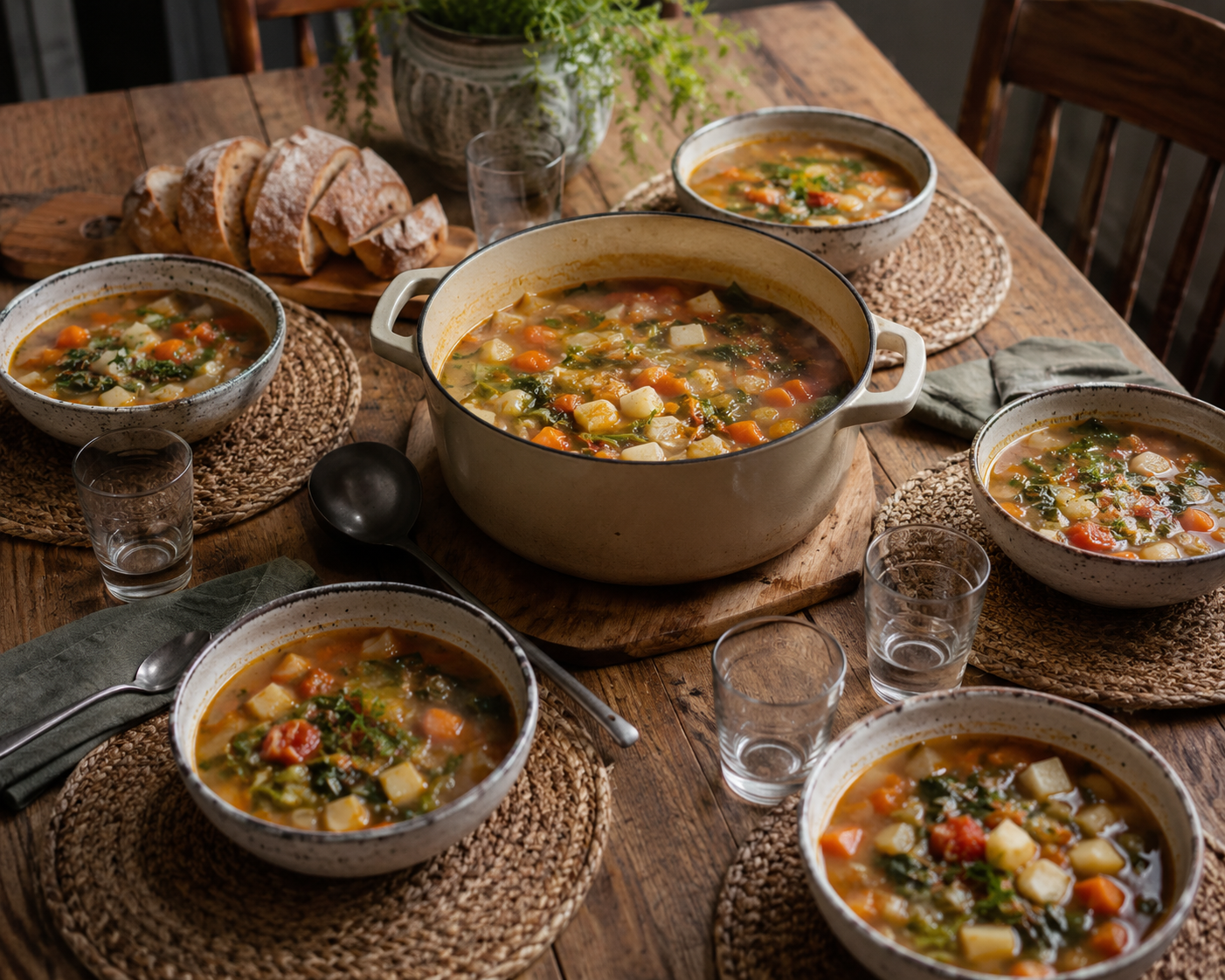
Sometimes homeschooling can feel like it needs to be elaborate, planned, and perfectly structured. Yet some of our most meaningful learning moments happen in ordinary activities. A simple winter soup became a lesson in literacy, mathematics, science, health, and life skills. More importantly, it created an opportunity to connect, work together, and enjoy the satisfaction of sharing a meal we had prepared ourselves.
These everyday experiences remind me that learning is everywhere. The kitchen, the garden, the supermarket, a walk through the neighbourhood, or an afternoon at the library can all become rich educational opportunities when we take the time to notice them.
And on this cold winter evening, surrounded by steaming soup and sniffly noses, learning felt warm, practical, and wonderfully memorable.
Wandering Wilds Homeschool