Building a bike ramp: learning through real life projects
One of the things we love most about homeschooling is that learning doesn’t have to happen inside or with books. Some of the richest learning experiences happen when children are actively involved in meaningful projects, and our recent bike ramp build was a perfect example of this.
The boys had an idea: they wanted a bike and scooter ramp. Rather than simply buying one, they decided to design and build their own with Dad.
The project began long before any timber was cut. The boys first discussed what they wanted their ramp to look like and how it would work. Together they sketched ideas, considered the size they wanted, and with Dad’s help, created a list of materials they would need.
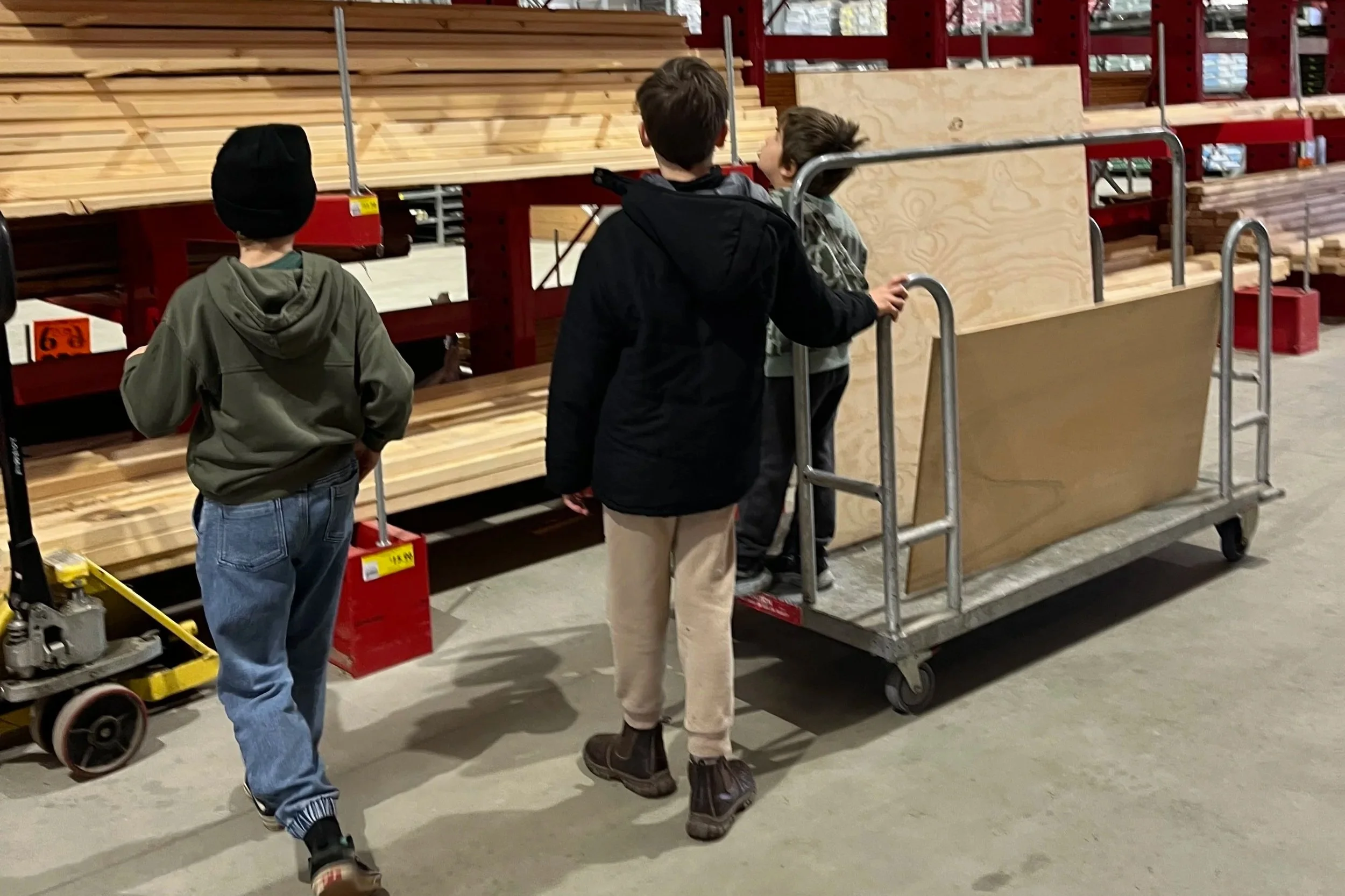
Armed with their shopping list, they headed to Bunnings with Dad to source the materials. This simple trip became a valuable learning opportunity in itself as they compared products, located items, discussed prices, and ensured they had everything needed for the project.
After their Bunnings trip (and a snag or two) they headed home to get busy creating.
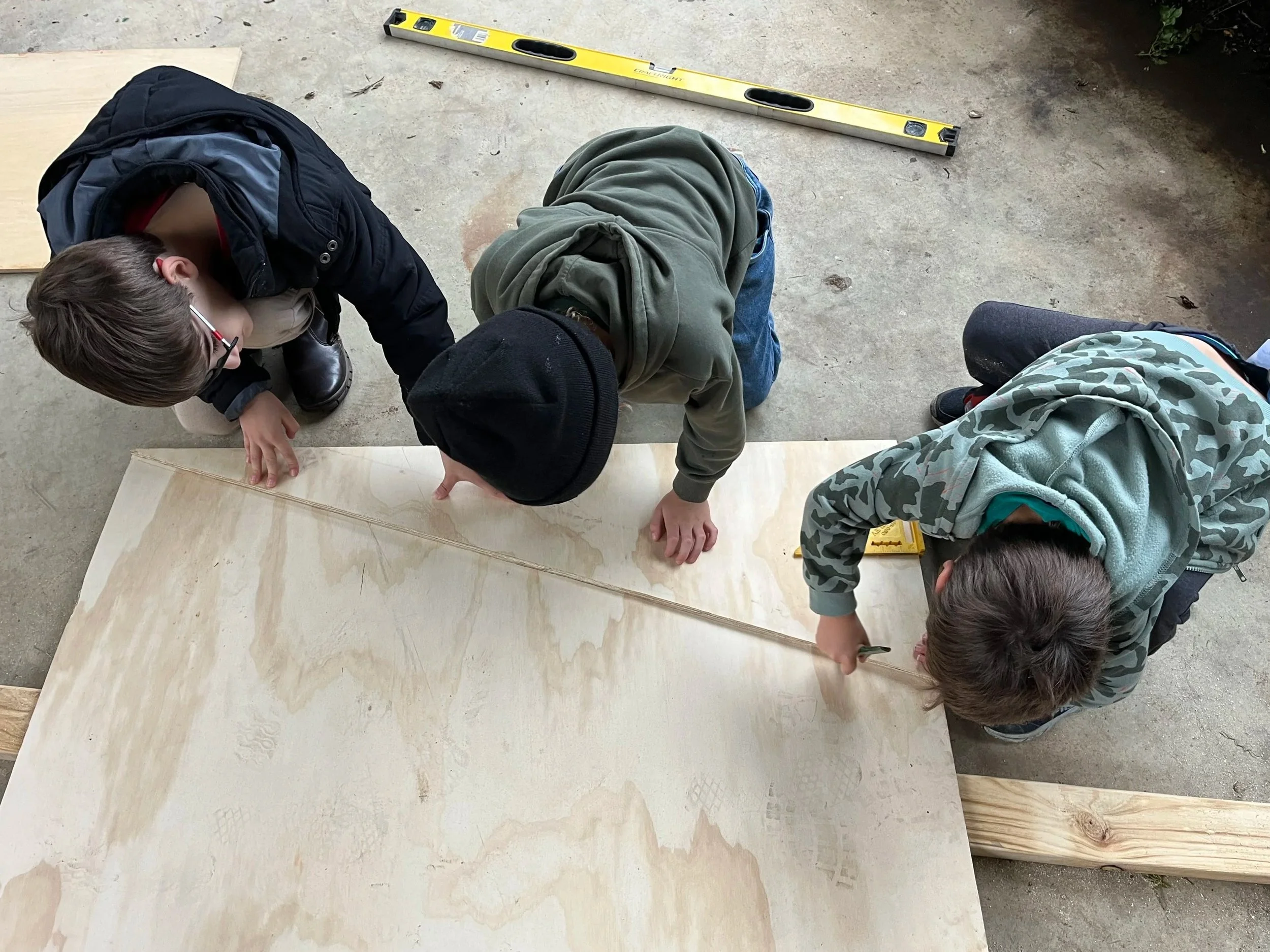
Back at home, the real work began.
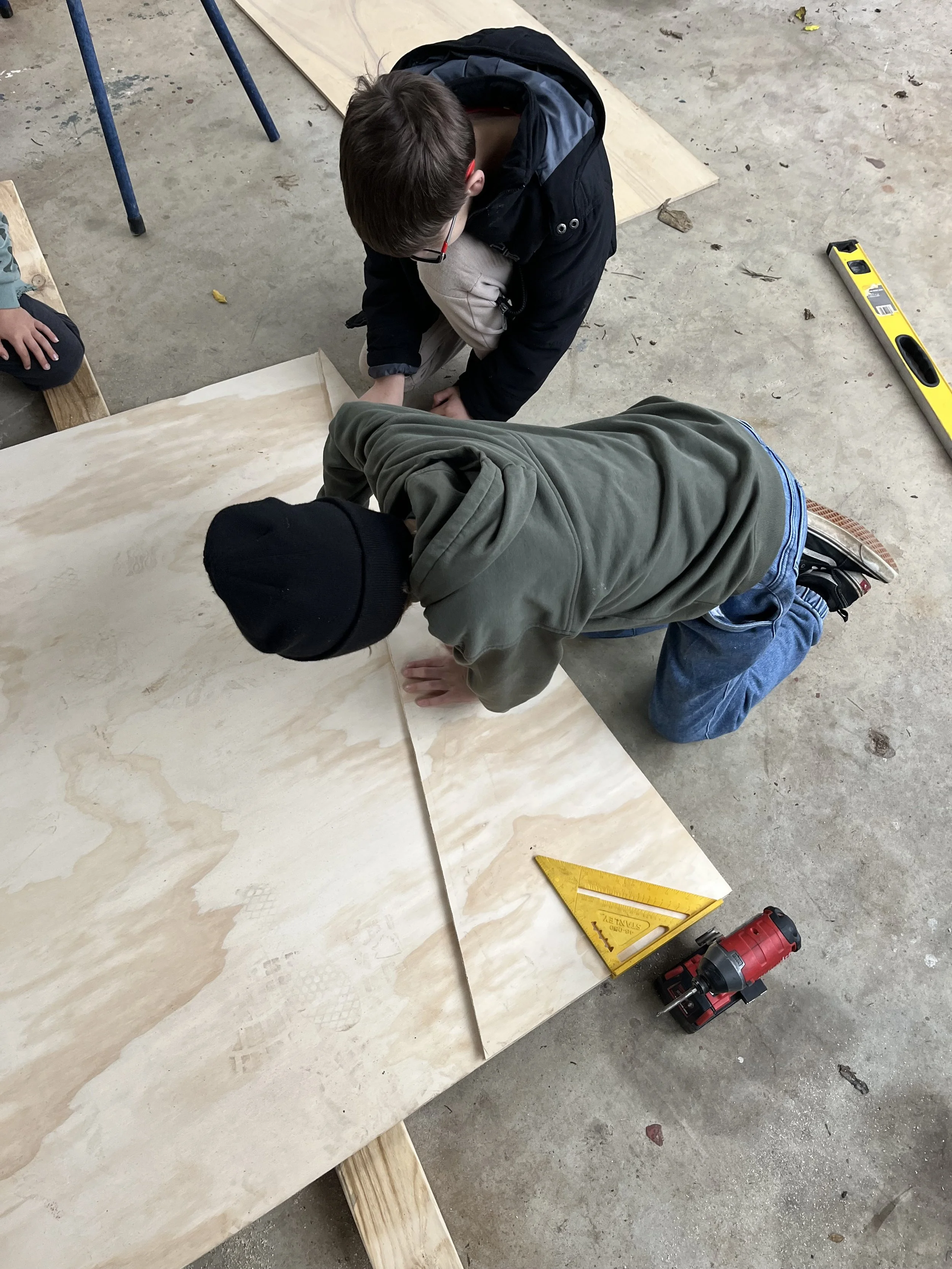
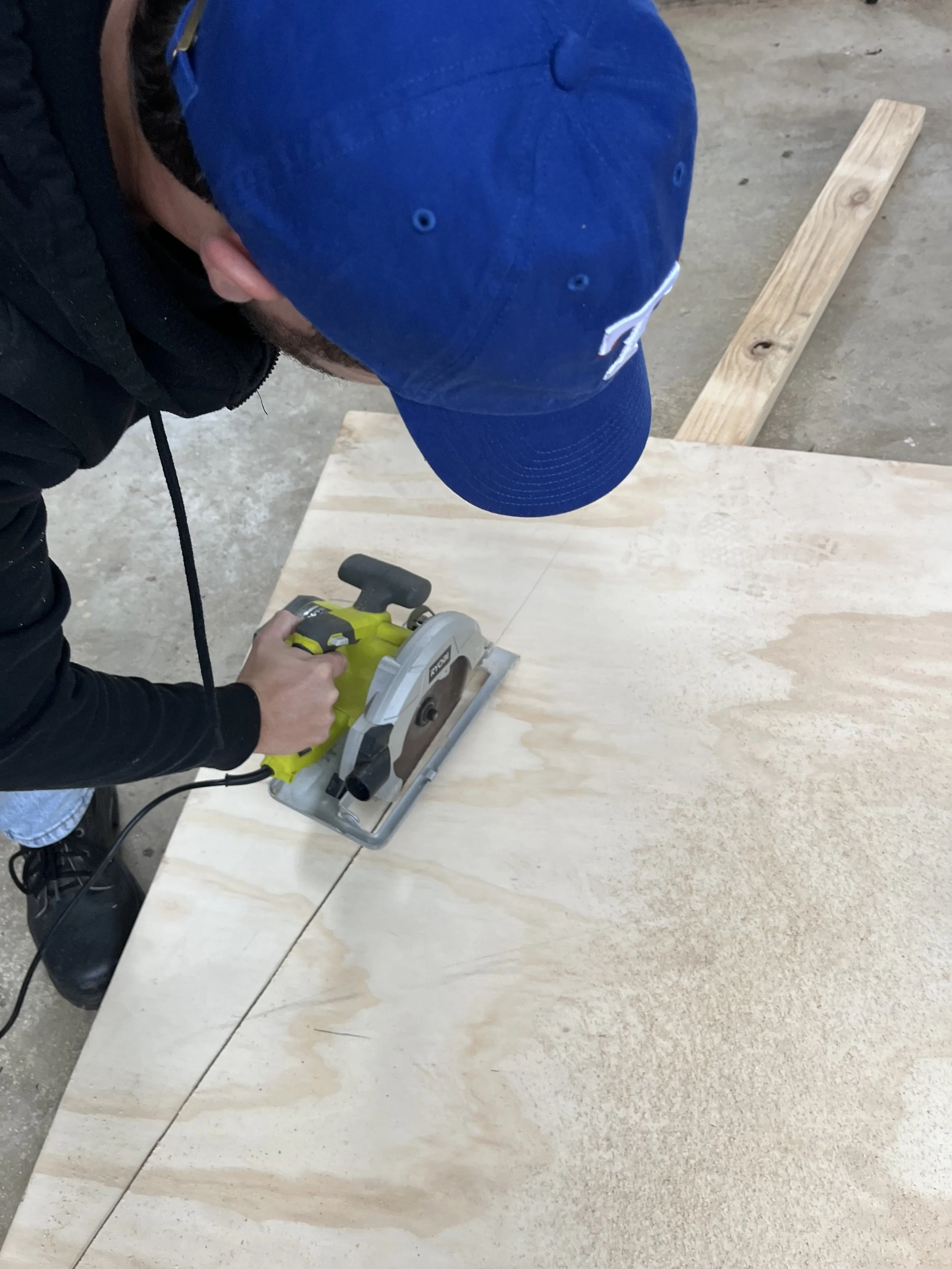
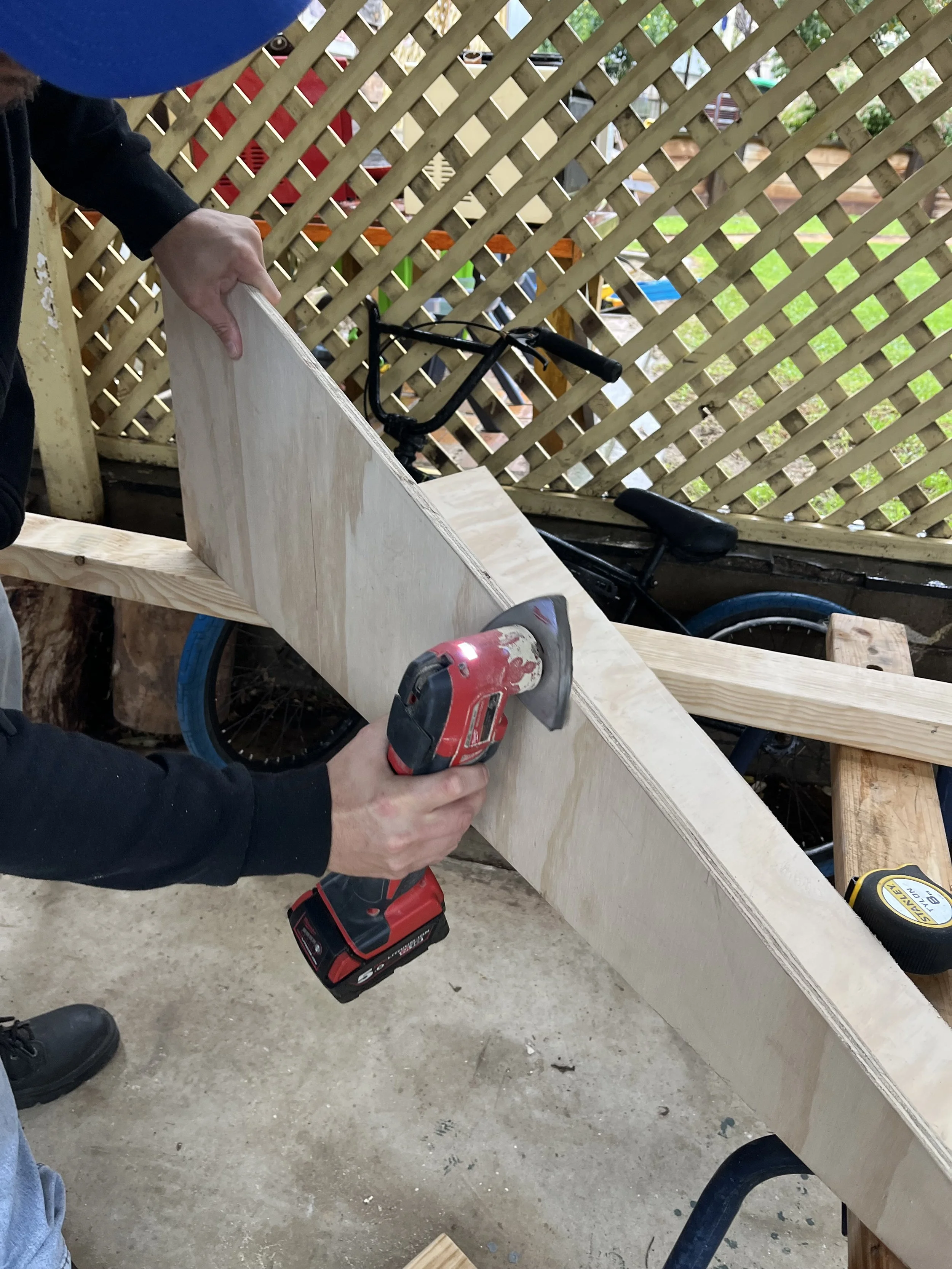
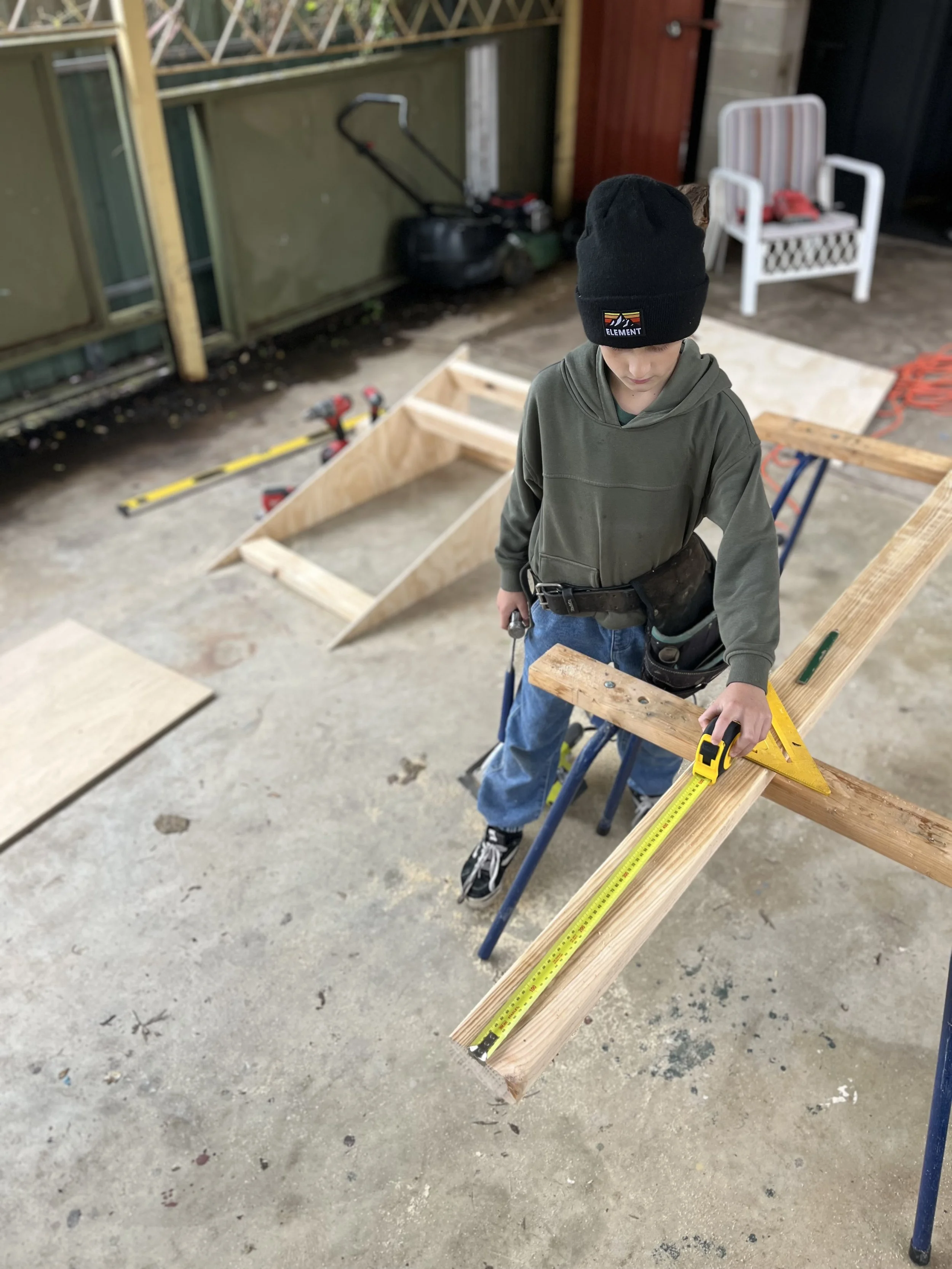
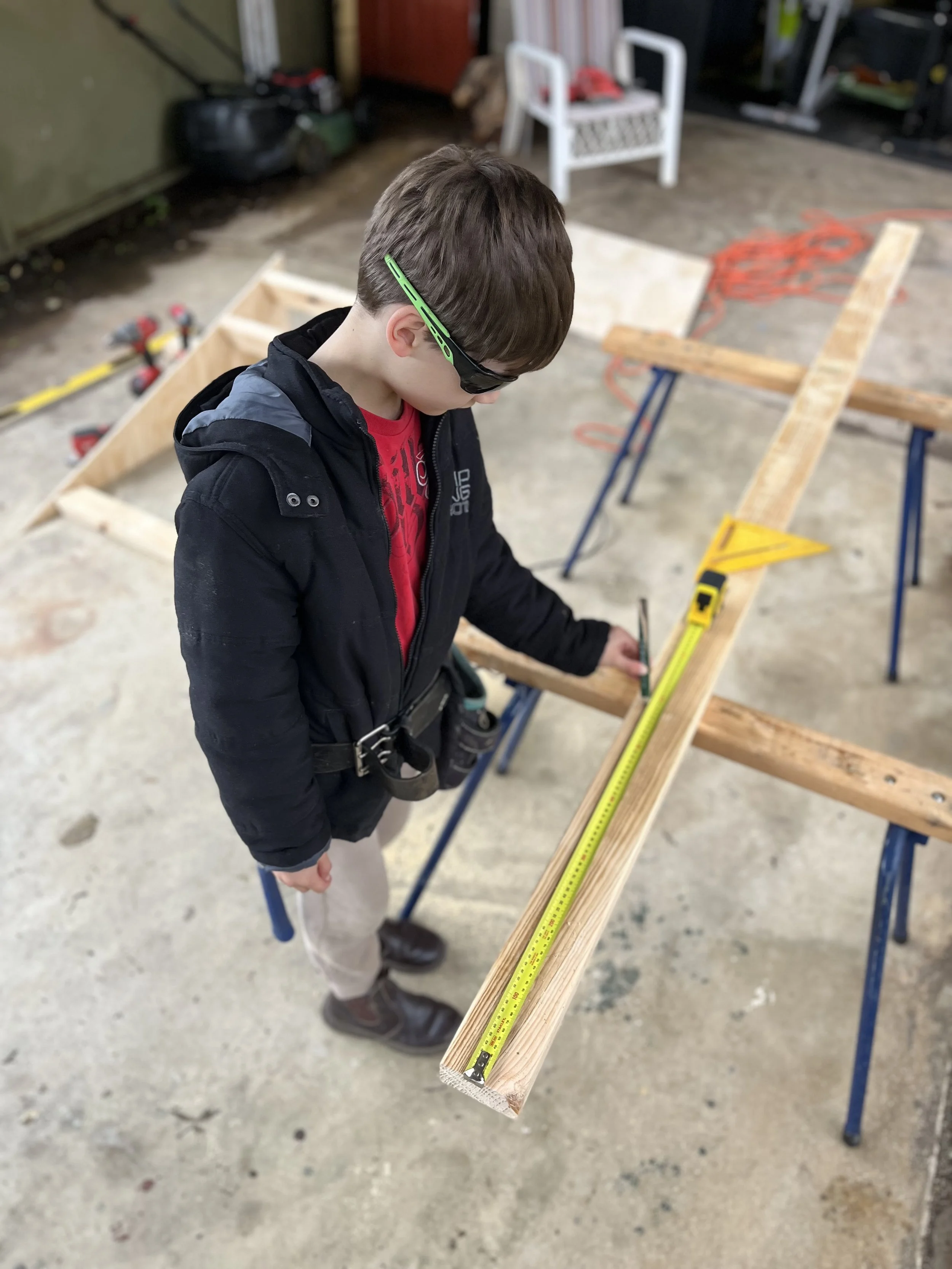
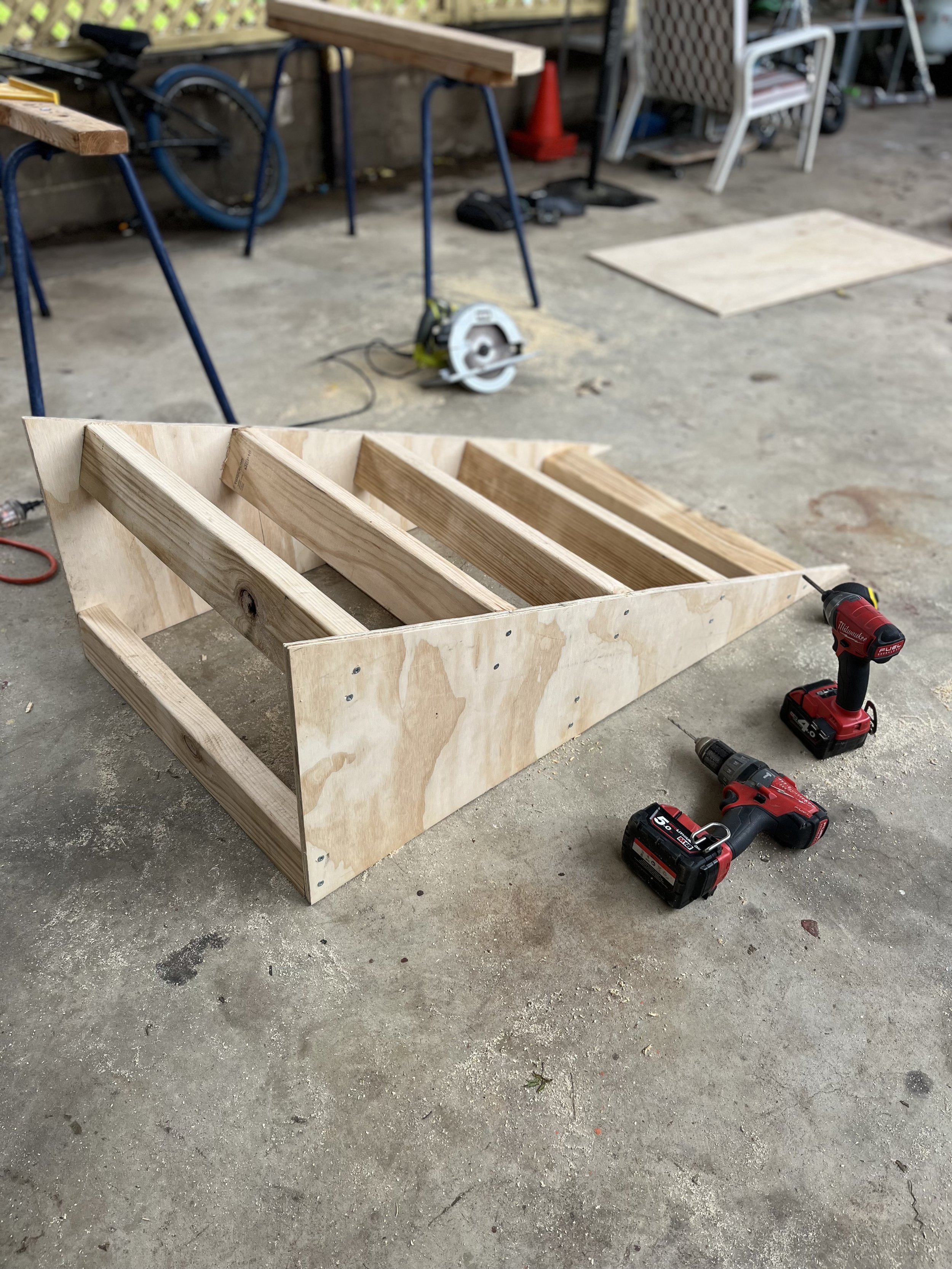
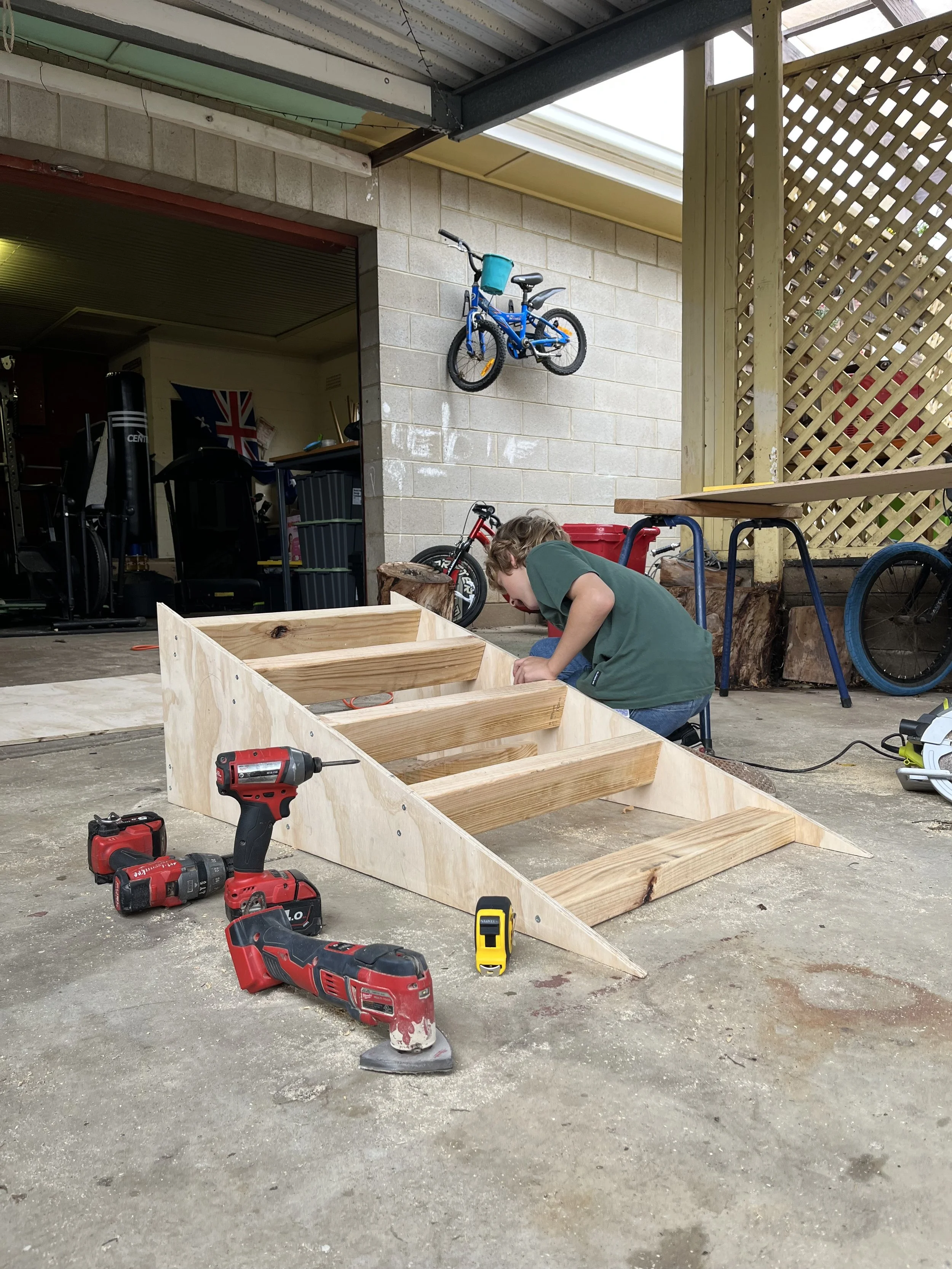
The boys were involved throughout the entire construction process. They helped measure timber lengths, mark cutting lines, drill holes, hammer nails, and secure pieces together. They learnt the importance of accuracy, patience, and safety while using tools and working with construction materials.
As the ramp took shape, they continually checked that everything was straight, smooth, and sturdy enough to safely support bikes and scooters. Problem-solving became an important part of the process as they worked through challenges and made adjustments along the way.
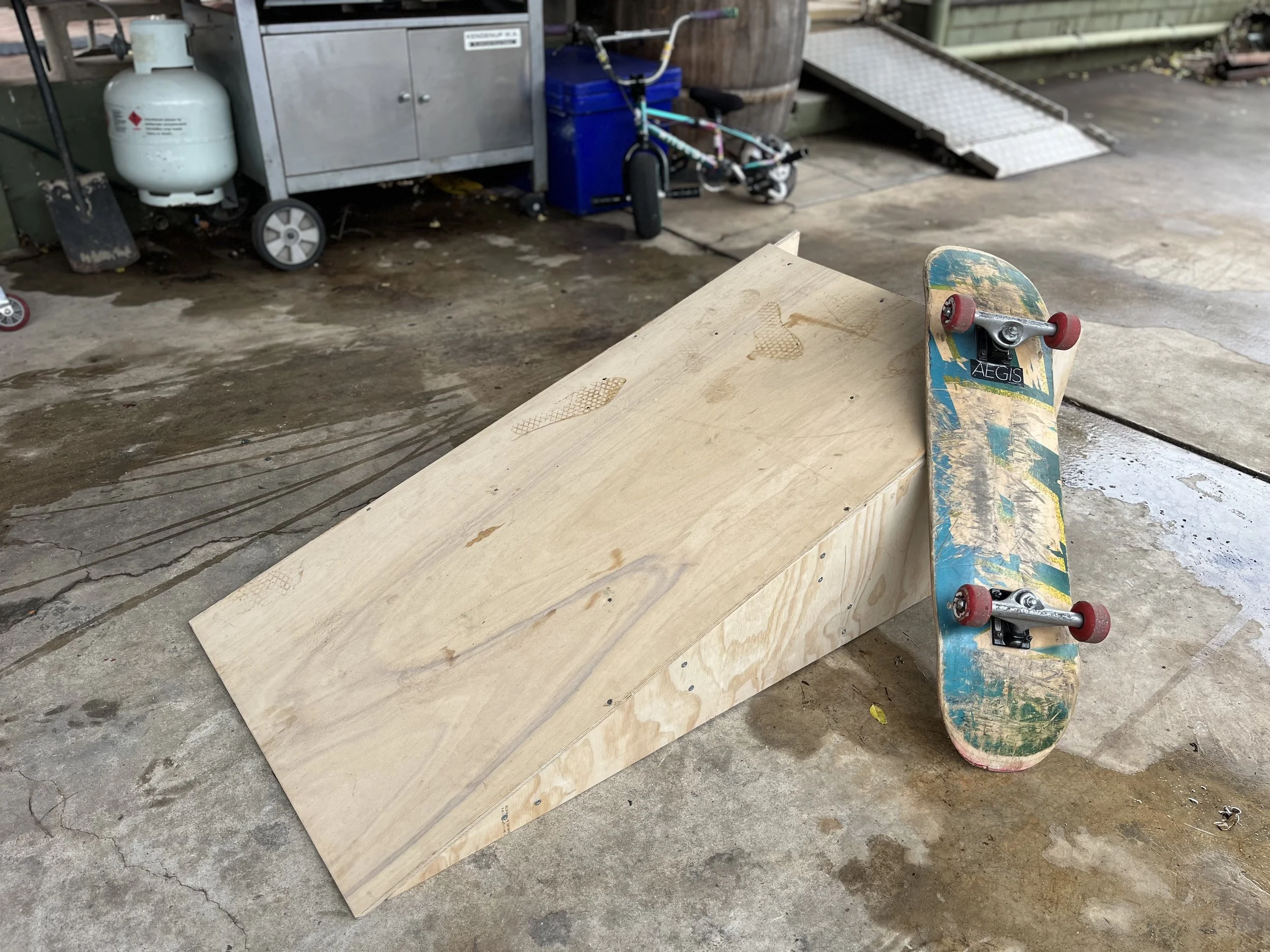
The greatest reward came at the end when they were finally able to test their creation. Seeing something they had helped build from the ground up gave them an incredible sense of pride and accomplishment.
Learning Connections
What may look like a simple construction project actually connected with a wide range of learning areas across the Australian Curriculum.
Mathematics
Measuring lengths and distances
Comparing sizes and dimensions
Estimating quantities of materials
Understanding shape and space
Applying practical problem-solving skills
Technologies
Designing and creating a product to meet a need
Following a design process
Selecting appropriate materials and tools
Evaluating the effectiveness of the finished ramp
Science
Exploring forces and motion
Understanding gravity and momentum
Investigating balance, stability, and structural strength
English
Creating shopping lists
Discussing plans and instructions
Communicating ideas during the design process
Reflecting on the project afterwards
Health and Physical Education
Developing confidence through physical challenges
Practising risk assessment and safe tool use
Building resilience and perseverance
Extending the Learning
One of the wonderful things about projects like this is that the learning doesn’t end once the construction is finished. There are many opportunities to continue exploring concepts through the completed ramp, including:
Cost Analysis
The boys can calculate the total cost of materials, compare prices, and determine which items made up the largest part of the budget.
Angles and Measurement
Using protractors or digital tools, they can measure the angle of the ramp and investigate how different angles affect speed and jump height.
Data Collection
By recording how far they travel or how high they jump, they can create graphs and compare results.
Science Investigations
They can explore questions such as:
Does a steeper ramp create more speed?
How does rider weight affect movement?
What happens when different surfaces are used?
Reflection and Evaluation
The boys can reflect on what worked well, what they would change next time, and how they might improve future designs.
Learning That Matters
Projects like this remind us that education isn’t always found in worksheets or textbooks.
When children design, build, create, and problem-solve alongside family members, they develop practical skills, confidence, resilience, and a deeper understanding of how learning connects to everyday life.
Most importantly, they experience the satisfaction of turning an idea into reality.
And that’s a lesson they’ll remember long after the ramp itself has been worn smooth by countless bike and scooter rides.
Wandering Wilds Homeschool xx